

The Tragic Affirmation of Jason Arday
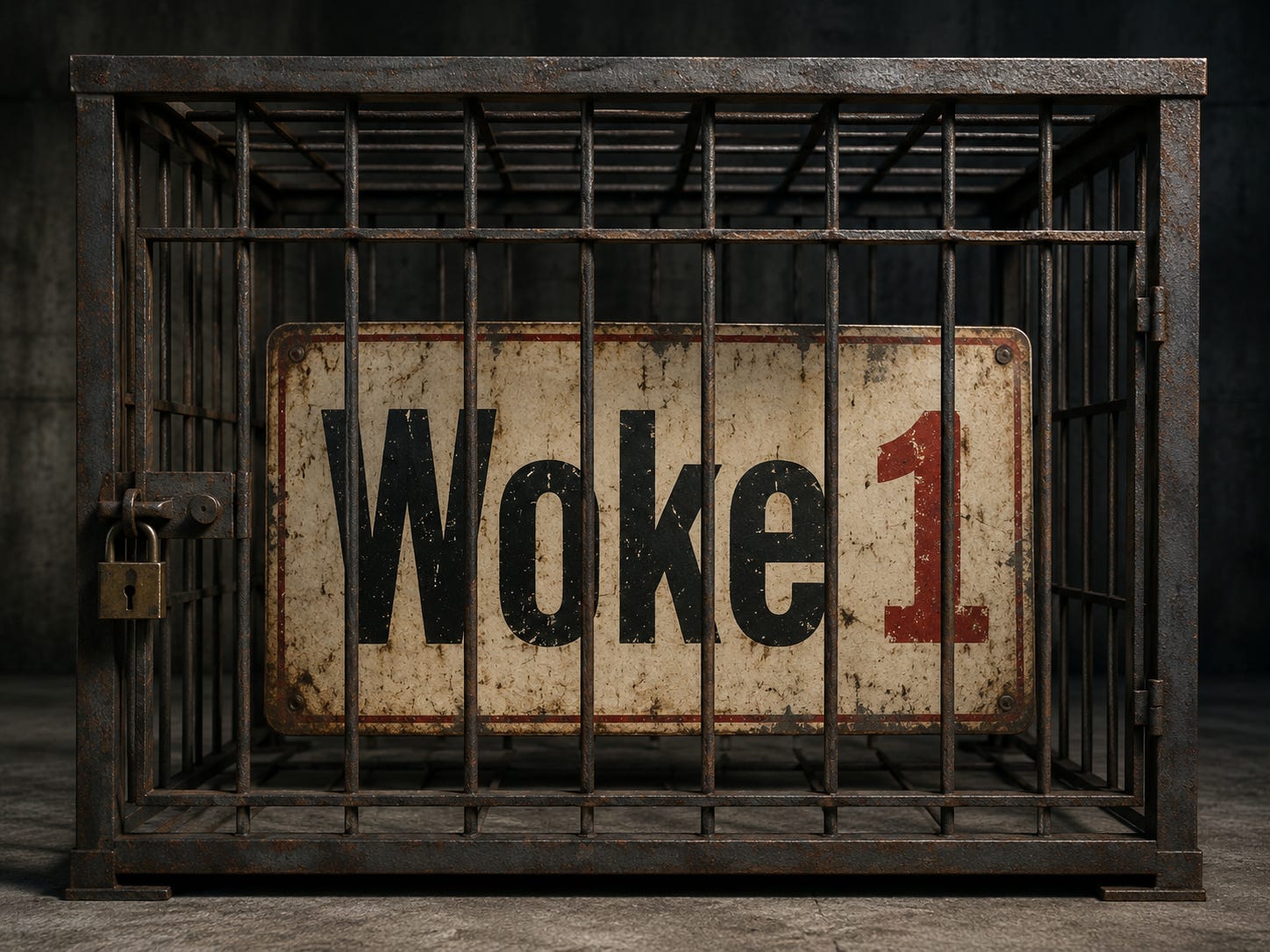
Woke 1 wasn't just crazy; it was dangerous.
This post is free to read and comment on. If so moved, please consider a paid subscription.
By now, many of us know the tragic story of Jason Arday’s life and death. He was celebrated as the University of Cambridge’s youngest black professor, a talented athlete, and prolific fundraiser for charity. That is, until first a journalist, and then a philosopher who describes himself as a "race realist," exposed Arday’s long history of plagiarism and mendacity. His mutism-and-illiteracy-to-PhD story proved too dramatic to be true. Last week, Arday was found dead; many people assume he took his own life.
There’s overlap between what happened to Arday and what happened with youth gender medicine. Arday was affirmed, celebrated for his identity above all. Hundreds of thousands of young people in America have had their gender identities, and sense of being born in the wrong body or sex category, affirmed; they were celebrated for their identity above all.
When journalists and scholars accused Arday, he and his defenders, including Cambridge, launched ad hominem attacks, silencing or banishing accusers, labeling them racists. Similarly, when journalists and scholars—not to mention parents, liberals, lesbians and gays, old-school transsexuals, and many others—questioned the affirmation and medicalization of gender identity, they were accused of transphobia, at the very least. Plenty of families who resisted affirmation were faced with CPS investigations. And of course, Arday himself—and I mean it when I say may he rest in peace—never took responsibility for concocting his stories and copying work, just as people who transition often don’t take responsibility for the decision and its consequences, asserting victimhood when states, for instance, demand sex-based markers on drivers’ licenses.
Those who elevated Arday to a position he was unqualified for sealed him into the narrative he’d conconcted, with no way to rewrite the story. It was a one-way street, leading to a dead end. I don’t blame those who investigated him or exposed his lack of qualifications; if I’m going to blame people, it would be those who lifted him to levels he ended up not having the skills or knowledge to navigate. Those who told him he was “the best in the world” may well have been elevating themselves just as much—shaking off the white guilt and the legacy of institutional racism. e
I wish Cambridge had acted in 2023, when suspicions about Arday’s work first surfaced. I wish the institution had acted as New York magazine did this month; they severed ties with writer Ross Barkan just a few months after a review documenting 67 instances of plagiarism. Maybe it’s easier to fire people when their identities aren’t treated as their qualifications, as happened during the era of “Woke 1”—a term recently making the rounds thanks to Alexandria Ocasio-Cortez.
The cancellations of Woke 1 were also a one-way street. Anyone remotely suspected of the newly original sin of racism could be condemned, but when it turned out that anti-racism among white people resulted in an appointment of, as The Atlantic’s Tyler Austin Harper put it, “Cambridge’s magical negro,” condemnation was considered racist, too. The charge of racism erected a fortress; eventually, it trapped Arday inside.
Harper himself recently wrote about being a black professor at Maine’s Bates College, where he was pressured to focus on race, which wasn’t an integral part of his work. (He specialized in “19th- and 20th-century British literature—the infamous ‘dead white men’ of European art and letters,” as he put it in a Boston Globe op-ed titled “I am the wrong kind of Black professor.”) Though he was indeed qualified for his position, he eventually realized that he could no longer be Bates’ DEI poster child, or operate within the constricting parameters of Woke 1.
We can argue about whether race is a category worth consideration in addition to qualifications. I believe that in some cases, it is. But it can’t be the only qualification, as Arday’s story reflects, because when it is, the wrong people advance. The same thing happened with a black female academic who’d won many prizes before she, too, was accused of plagiarism—I don’t mean Claudine Gay, but historian Kerri K. Greenidge.
There don’t seem to be as many such stories about white academics, though. Is that because black academics are more scrutinized? Is it because they’re garnering more attention in the woke biosphere in the first place because of their race? Is it because, when people are promoted based on race instead of (as opposed to as well as) their qualifications, the flaws of their work are easier to see? Was it because of Woke 1’s hiring requirements?
I’m using the past-tense, but I don’t think Woke 1 is over. People are still elevated and celebrated for identity alone.

And some legacy media still employs the same old woke framing. Take this NPR story on the Arday saga. Juana Summers talks to a black professor named Shaun Harper, who hadn’t heard about Arday until “news stories and social media posts about his alleged plagiarism. And, you know, that was really familiar to me in a really disgusting way,” he tells her. That’s because black male academics have had to “endure the same kind of scrutiny and undeserved dragging in the courts of both academic and public opinion.” The story didn’t engage with the ample evidence Arday’s missteps. It framed him as a victim of racism.
Shaun Harper said that “part of the work that I do with corporations and other organizations entails doing assessments of the workplace racial climate.” Like Arday, his work centers on race, and his paycheck depends on it. There needs to be a steady supply of racism to make a living fighting it. (Luckily, workplace trainings on race seem to create more racist environments, not fewer, maintaining demand for interventions.) Woke 1 was, is, an industry, which includes anti-bias trainings and youth gender medicine. Since people could only pontificate about groups they belonged to, it followed that if you belonged to the group, you had to pontificate about it—as Tyler Austin Harper discovered.
It wasn’t that long ago in this country that people were systematically excluded because they weren’t white, and that whiteness was a prerequisite for inclusion and advancement. But Woke 1’s hyper-focus on identity, whether race or gender, was damaging in a different way. The solution to the original problem isn’t to shift the balance of unfairness. It’s to make it fairer for everyone.
To do that, we’d have to admit what went wrong with Woke 1—not just now saying “Defund the police” was a bad idea, but that insisting “trans women are women” wreaked havoc; admitting that gender identity is an idea, not a fact; and retreating from framing critiques of youth gender medicine as a Republican wedge issue.
The Metropolitan Police have apologized for investigating the journalist who emailed Arday. That’s a start.
But I’m not sure that AOC is ready to either apologize or admit what was particularly egregious about Woke 1. I get that she now wants to distance herself from the defund-the-police brigade, likely to position herself as more moderate so she can run for president. But she herself rode that wave into office when she unseated a moderate Democrat; the better move would have been to relocate to a rare Republican seat in NYC and run there. If we want to take the country back from the mad men who seem to be hell-bent on destroying it, we ourselves (and by that I mean liberals and Democrats) need to reckon with the destruction of Woke 1—the cancellations, the destroyed careers and lives, the broken families, and even the tragic deaths.
Yes, Woke 1 was crazy. It still is.
Brilliant. Don’t let AOC gaslight anyone that Woke 1.0 was crazy because it is still smoldering, ready to burn everything down with Woke 2.0 if the DNC/DSA ever seizes national power again. The Smithsonian should curate an exhibit on the woke era so we never forget: https://yuribezmenov.substack.com/p/woke-smithsonian-museum-exhibit
"There’s overlap between what happened to Arday and what happened with youth gender medicine. Arday was affirmed, celebrated for his identity above all. Hundreds of thousands of young people in America have had their gender identities, and sense of being born in the wrong body or sex category, affirmed; they were celebrated for their identity above all."
Stella O'Malley said a few weeks ago that trans ideology represents the clearest lens through which we see the disintegration of Western society. And you're more than right to draw this parallel here in the Arday case. And it makes me sick to see all the performative gestures to shake off the white guilt having an unfortunate effect -- the radicalization of young white Gen Z men who've been told for years that they were toxic and less than because of their skin color. And now, some of them are actually leaning into the prejudice. Strange, unnerving times.