

The Miseducation of America and Title IX
How the media got yesterday's SCOTUS ruling so wrong
Depending on which media you consume, you may have learned yesterday that the Supreme Court upheld the rights of states to ban transgender girls and women—that is, males who identify as girls or women—from sports.
This is not true. They upheld the rights of states to maintain laws and policies that segregate sports by sex, not gender identity. That is, they allow for the understanding of Title IX in its pre-Obama incarnation.
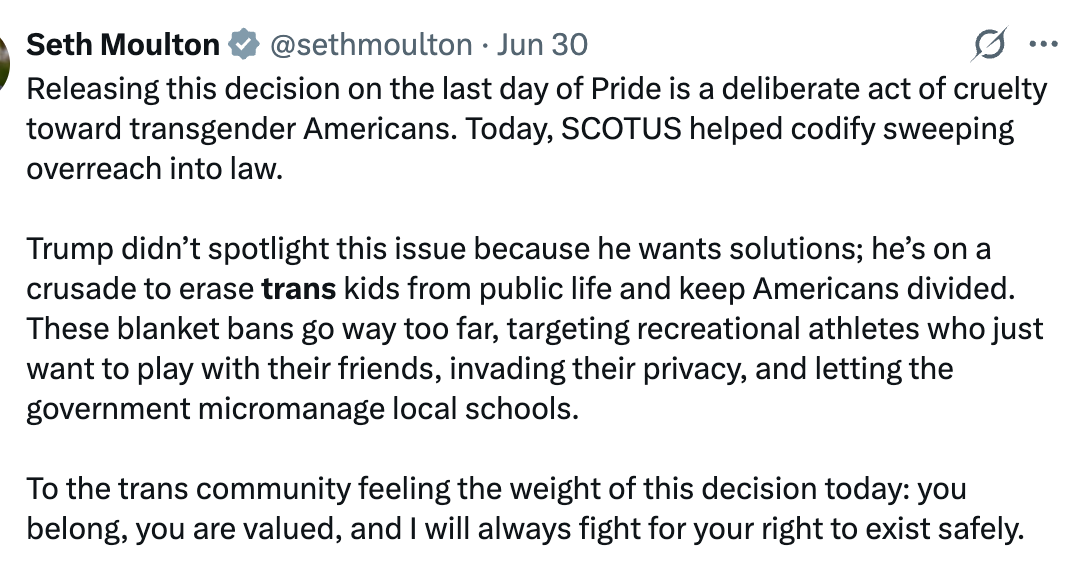
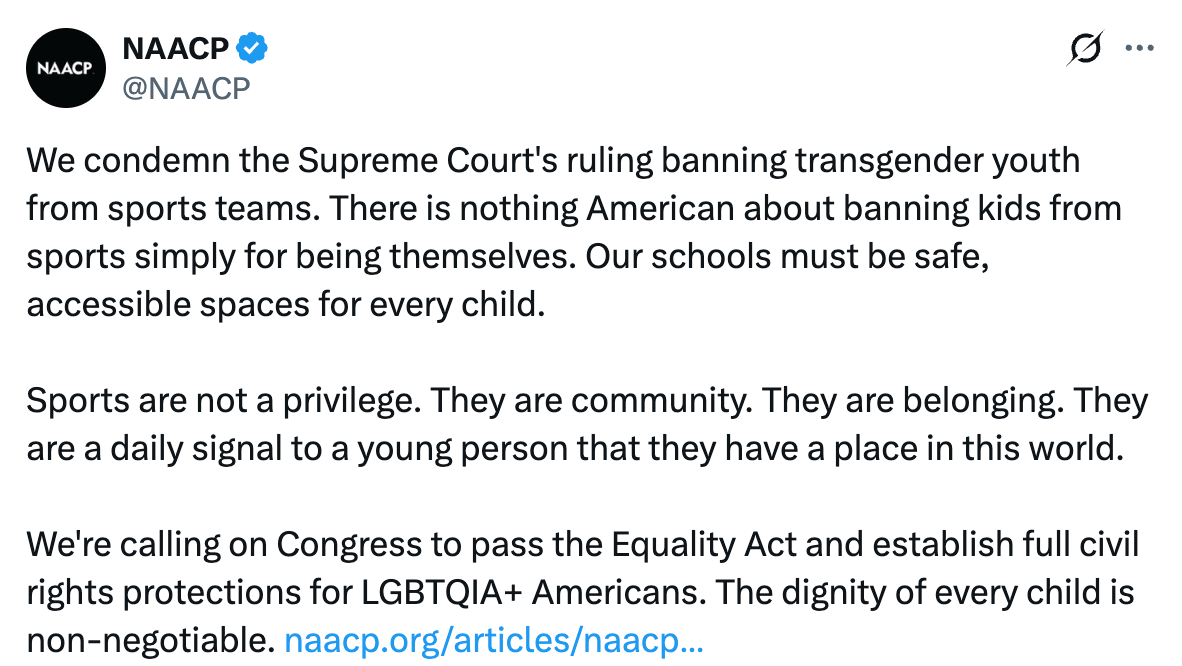
Would that the media had explained those changes to Title IX, and the codified reinvention of the term sex. Had they done so, we’d be having a different, more nuanced conversation than the simplistic “Trump hates trans people” narrative that public liberals, and liberal organizations, assert, and the media echoes.

In 2010, Obama’s Department of Education issued a “Dear Colleague” letter—a nonbinding but strongly suggested policy related to bullying. It was part of a subtle shift in rejiggering sex-based harassment and sex discrimination into “gender-based” harassment and sex discrimination, which allowed for the following:
Title IX also prohibits sexual harassment and gender‐based harassment of all students, regardless of the actual or perceived sexual orientation or gender identity of the harasser or target.
Doing so allowed for gender identity to be understood as a facet of sex, thus a protected characteristic.
In May 2016, the Departments of Justice and Education co-released “Guidance to Help Schools Ensure the Civil Rights of Transgender Students.” Per their press release: “The guidance makes clear that both federal agencies treat a student’s gender identity as the student’s sex for purposes of enforcing Title IX.”
Gender identity was no longer a facet of sex, but a substitute for it. This didn’t happen through a legislative process, or because people’s hearts and minds had changed and regulations reflected that change. Rather, politicians had withdrawn “gender identity” as a protected characteristic in proposed anti-discrimination laws, assuming that Americans could handle protecting people from discrimination based on sexuality, but not based on this relatively obscure notion of a subjective sense of one’s sex.
They were right, of course, and advocacy groups like GLSEN and HRC found other pathways to get what they wanted: through meeting with Obama and Biden officials and sneaking changes into policies, thus strong-arming institutions into compliance, lest they risk federal funding.
Though the changes occurred after periods of public comment, there was no public education to explain to people what these changes might unleash, and that they allowed for anyone who identified as a girl to not only play on girls’ teams but use their facilities. The changes lead to a radical change in how society is organized, pushed through beneath the veil of progressivism and anti-bullying. Thus, anyone who objected was regressive and a bully.
Few in the liberal sphere talked about the effects such a radical reimagining of sex would have on the women and girls that Title IX was designed to uplift and support. And their voices are still shockingly absent from liberal media coverage. NPR, as usual, ignored women’s experiences entirely. Ironically, the commentator they chose came from The 19th, an outlet named for the 100-year-old amendment allowing women to vote. She explains that the girls who brought the lawsuits—meaning, the males who identify as girls—are heartbroken by the ruling, but there’s nothing about the experience of natal girls and women, or about the assumption that gender identity is a reasonable marker of societal division.
If you read the ruling, you’ll see a lot of compassion from the judges, regardless of their political leanings. But you’ll also see the issue at the heart of the battle.