

Feminists for Gender Roles!
Or: Better options for those who can't conform
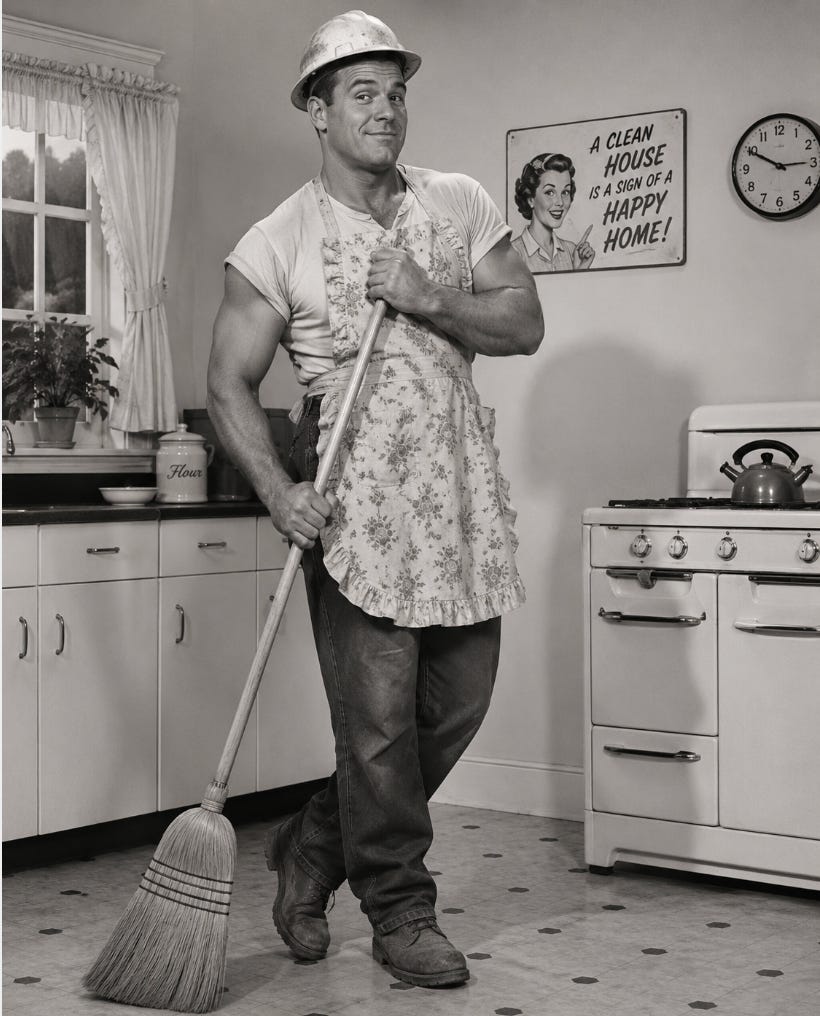
Gender roles are alive and well in rural Pennsylvania. At least, they were alive and well at the two proms I witnessed last weekend—not because I attended them, but because my “courtyard-view” hotel room in Lancaster, where I was attending a girls’ regional volleyball tournament with my daughter, looked out onto them. There’s nothing like trying to get a good night’s sleep for a 5 a.m. wake-up while a hundred teens scream Justin Bieber lyrics ten feet away…while also paying an exorbitant amount for it.
If this sounds like complaining (or my pitch for a slight rebate from the management), rest assured, I enjoyed every minute of my trip to Regular America. That’s because I love to visit other cultures within my country, to find out what’s considered normal there. I live in a place where we often think of traditional Americana—of conformity—as morally deficient in some way. We look down on those who mindlessly replicate trends, like, say, wearing some variation of the same long gown, as was the case with every single prom-going girl I laid eyes on. (The boys, meanwhile, seemed to show a little more variety in their suits, or lack thereof.)

The vibe at the tournament was similar: not a single short-haired girl among the throngs, and ribbons commonly threaded into pony-tails. I am unclear how they spiked the ball, considering that many of them sported the new trend of extremely long, claw-shaped nails with a gel manicure.
I’m fascinated by this gender conformity and no longer judgmental about it—for two reasons. The first is that the research I did for Tomboy showed me that the tomboy project of the 1970s wasn’t just about promoting “masculinity” for girls—allowing them to be sporty and wear their hair short and such. It was about impugning femininity. But there are plenty of behaviors and traits beneath the banner of femininity that are necessary and good for both girls and boys: nurturing, communication, cooperation. I decided that decrying conformity for its own sake ran counter to the ultimate project of creating functional and thriving adults.
The second reason is that conforming was not an option for me. In the greed-is-good 1980s, conformity required money. You wouldn’t be caught dead in Kmart, and showing up to school in your off-brand CB jacket was worse than not having one. It was not cool to shop at Salvation Army, as my family often did. I couldn’t paint my nails like the other girls, because my fingers were fat and crooked and my nails short and oddly-shaped. Sometimes I’d sit on my hands to hide them, even though my favorite things to do—pottery, guitar-playing, drawing—relied on exposing them. I wasn’t nurturing or cooperative, and I didn’t look or act like many of the other girls, but I wanted to. Most of my adolescence (and a good part of my adulthood), I was on fire with shame and self-hatred. I left school half-way through my senior year. I never went to prom.
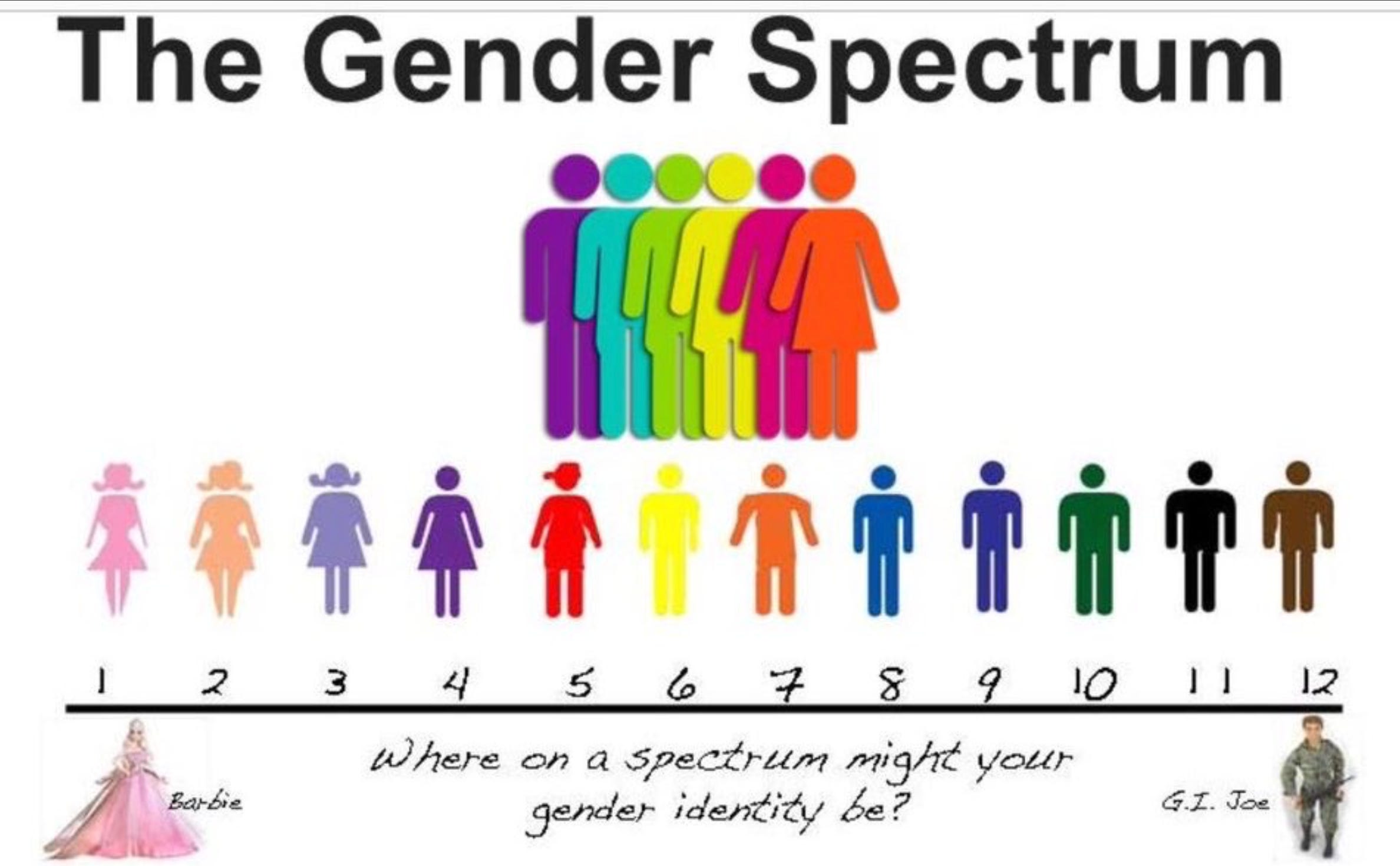
Never would I have predicted back then that, in the 21st century, the worst thing a child could be—at least in LiberalLand—was normal. Cis, straight, white, and/or Christian equaled oppressor, which may be one reason why adolescent referrals to gender clinics tended to cluster among the wealthy and white, even if those with non-normative identities in the general population were more diverse. Anyone who veered slightly from traditional gender roles—which is to say, anyone who was not a living Barbie or G.I. Joe—was on the spectrum between male and female, instead of just a normal variation of a man or woman, boy or girl.
Gender roles evolved—in part to help us find mates and keep our kids alive—and were also shaped by culture. Though I firmly believe there is no one right way to be a boy or a girl, I do think there is virtue in understanding how normative sex-based behaviors came to be. In rejecting gender roles, it seems, many young people have forgotten how to be human, which involves some expression of both masculinity and femininity, and has no effect on one’s sex.
It’s okay to conform, to be normal, to try out the trends as part of adolescent identity exploration, to figure out what you like and what you don’t like and to develop a sense of self. And it’s also okay to be naturally repelled by those norms—to not have long hair and wear a strappy gown. (Also: the claw nails? Looking forward to the end of that trend.)
Admittedly, I have been very impressed with the teen girls I’ve interacted with. The girls at the volleyball tournament, even in their teeny-tiny short-shorts and tight shirts, were not afraid to be powerful. They pounded the floor and shouted Ace! when their teammates hit an unreturnable serve, or erupted into various chants depending on the play, whose lyrics I couldn’t discern. It was a little bit religious, but also sort of girl battle cry, and I’m here for it.
When I was their age, girls had to pretend we didn’t fart. My kids and their friends think farts are hilarious and let them rip in front of one another. (Yes, I am measuring progress by public flatulence.) There are very large girls filled with body confidence, sporting the same sexy outfits as the petite ones. (Yes, I am measuring progress by half-shirts for chubby girls.) I see girls of different sizes and races and abilities feeling empowered. I see them feel like they can conform, when in earlier eras they would have self-deselected from trying. And yes, I am measuring progress by more inclusion in normality because most of us need a sense of belonging in order to develop the strength to stray from it.
I also see the girls who haven’t found a place—and who think that because they haven’t, they’re not girls. I’m not talking about the naturally gender nonconforming kids, the super-masculine girls who, left alone, will likely (but not definitely) grow up to be gay. I’m talking about the girls who can’t find their way to conformity, but wish they could.
I would have been one of them. I was drowning in such corporeal shame that I absolutely would have been diagnosed with gender dysphoria, and had clung to nonbinary as a life vest. I would have medicated. And I highly doubt I would have been lucky enough to discover what ending up helping me more than any therapy or medical treatment: marriage and a family.
We need to allow wiggle room, for the full spectrum—not between Barbie and G.I. Joe, but between the strappy gown and the girl-in-the-suit, between those who pound the ground and shout Ace! and those who, like me, stand on the sideline, as scared of the group as I was—as I am—envious of it.
As a fellow member of the bohemian class, raised to view middle America with disdain, I concur. When I left my bohemian enclave to attend college at a midwestern university, I was horrified by frats and sororities: so conformist! But my arts program was likewise: we all had similar haircuts and dressed the same.
Today I see the value of groups, communities, networks. Dismissing the search for community is a mistake.
Lisa, Time and again you help me see complexities with greater clarity. Thank you.